ruff
Numele forumului cat si aceasta descriere pot fi modificate accesind meniul ADMIN -> OPTIUNI
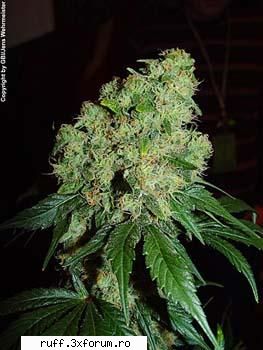
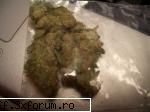
Bubble Gum is a medium tall, usually not too branchy (sometimes stretchy) plant, producing compact, crystal covered buds. Originally the Bubble Gum was developed by growers in Indiana, USA. From there the genetics moved to New England and eventually Holland. lt took many generations to finally produce this stable Bubble Gum, with the characteristic, sweet smell (truly resembling a typical bubble gum taste) and euphoric high; the original trademarks of this famous strain. The only inbred strain (no F1 hybrid) on the Serious menu.
Winner of two awards in the High Times Cannabis Cup of 1994, a 2nd place in 1995 and again a 2nd prize in 1999, gives Bubble Gum a total of 4 awards from the judges.
Bubble Gum is a medium tall, usually not too branchy (sometimes stretchy) plant, producing compact, crystal covered buds. Originally the Bubble Gum was developed by growers in Indiana, USA. From there the genetics moved to New England and eventually Holland. lt took many generations to finally produce this stable Bubble Gum, with the characteristic, sweet smell (truly resembling a typical bubble gum taste) and euphoric high; the original trademarks of this famous strain. The only inbred strain (no F1 hybrid) on the Serious menu.
cu si despre weeeeeeeeeeeeeeeeeeeeeeddddddddd – poza de sizzla, in Strictly Hip-Hop&Raggae · 7.8KB
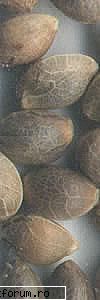
Get the Best Seeds Getting the best seeds is the only reliable way to get the best plants. Quality seeds may sound expensive but they are well worth it in the long run. Good seed banks test the germination rate of their seeds as well as the genetic stability of plants grown from the seed. Once you have waited 3 or 4 months for dope and ended up with a load of old rope you start to be more choosy about the seeds you put in your grow room. Seed From Your Stash Seeds from a batch of good cannabis will not necessarily produce good plants. Even if you know both parents of the seed and its history don`t rely on it producing buds as good as the bud it came from. Stash seed is good to practice growing with however especially if you have no plant care experience and sometimes you can hit upon a real gem of a plant. Female Only Seeds These are produced by using stress or hormones like Gibrellic acid to turn part of a female plant male. Pollen collected from the male part is used to produce seeds that contain no male genetics, hence female only seeds. These are great for crops grown straight from seed.
Seeds Are Individuals Seeds are individuals like you and me. A packet of 10 seeds will produce 10 individual plants, even if they are the same variety each will have its own special characteristic. 1 may be taller than the rest , 1 may be shorter, 1 may be more resistant to fungus than the rest, 1 may be super strong. Of course with standard seeds around half will also be male.
Preparing Seeds There are a few ways to help increase the germination rate of your seeds. Pre-soaking the seeds in pH balanced water for 24 hours helps soften the outer shell and makes life easier for the emerging shoots. Placing the seeds in a fridge or freezer for a week or two before planting will also help. It tricks the seeds into believing they have been through the winter and that the time has come to start growing.
Starting Seeds in Soil Germinate your seeds in pots of moist seed compost. Use deep pots that allow plenty of room under the seed so the emerging root can grow straight down. A root that curls too early can increase the chances of the plant becoming a male. Sow the seeds 1 to 2 cm below the surface and water gently with pH balanced water. Cover the pots with clingfilm or place in a lidded propagator to ensure the compost is kept moist. Remove any cover when the seeds sprout.
Starting Seeds Without Soil You don`t have to use seed compost to start your plants. Try pots of Perlite instead or place the seeds straight into cubes of rockwool using a pencil to make a hole about 2 cm deep. You can also put the seeds between two wet paper towels but this method is stressful to the seed and unnecessary when grow mediums are so cheap. If you do use this method be careful to plant seeds as gently as possible (anyway up) as soon as they begin to sprout. Whatever medium you use the important thing is to keep the seeds moist until they have germinated.
Warm Your Seeds Warmth means faster germination. Once planted keep your seeds at around 70 degrees using a heated propagator or heating mat. Don`t worry if you can`t heat them they will still sprout but it might take a week or so longer.
Length of Germination Seeds should start to germinate (grow) 3 or 4 days after planting. You might have to wait a week or two to see anything emerge if they are in soil but be patient, things are happening. After 4 weeks or so it`s time to give up on anything that's not sprouted.
First Leaves The first set of leaves on a cannabis seedling are not true leaves and so will not have the classic cannabis leaf shape. You need to wait for the second set to grow for the leaves to start to look the way they should.
Stretched or Lanky Seedlings When grown in low light conditions with little air movement (wind) seedlings often stretch and become so lanky and top heavy that they fall over. To counter this soil grown seedlings can be re-poted with the stem buried right up to the lowest set of leaves. If the seedlings can`t be re-poted you will need to use supports of some kind. Trimmed cardboard tubes (toilet rolls) placed over the seedlings make good supports as they still allow stem strengthening movement and can easily be removed later.
Flowering Seed Grown Plants Cannabis seedlings need to mature into cannabis plants before flowering them. The length of time between seed germination and plants being ready to begin flowering will vary depending on plant genetics and the care given. At least 8 weeks of growth are really needed to allow the plants to build up energy reserves, particularly in their roots. Indoor growers however may find this means their plants get too large to flower. They should either flower when the plants reach a certain height (usually no more than around 30 cm indoors), trim their plants to acceptable heights a few days before flowering or use cuttings instead.
Lighting Seeds are built to germinate in darkness so they don`t require light at all for this process. It does no harm to place planted seeds under moderate light however and the added warmth helps with germination. Once sprouted the seedlings will of course require light to photosynthesis and grow. Powerful HID lamps or hot sun can fry delicate seedlings so fluorescent lamps or a shady place are good choices for the first few weeks. If you do use HID lamps raise them up about three times the recommended growing height and gradually lower them over the following weeks as the plants mature.
Storing Seeds Seeds can be kept for many years but they become less viable as time goes by. Storing them in a cool dry airtight container will keep them fresh for up to two years or more. For longer storage dry them well, seal them in a container and put them in the freezer.
Commercial Seeds and Breeding Good seed banks mostly sell seeds known as F1 hybrids. They are very good for growing but not for breeding. The seed banks spend lots of time (years) and effort to produce seeds that grow well and consistently and so have to protect their investment. If you try to breed with F1 hybrids without knowing what you are doing you will often end up disappointed.
cu si despre weeeeeeeeeeeeeeeeeeeeeeddddddddd – poza de sizzla, in Strictly Hip-Hop&Raggae · 6.9KB
Light and Dark Plant leaves capture light energy and turn it into the sugars that power their growth. This process is called photosynthesis. Up to a point the more light available to a plant the more it can grow. Darkness is also important for plants however. During dark periods plants transfer excess energy they have made in their leaves down into their roots. This promotes better nutrient uptake which in turn allows for better photosynthesis. With plants such as cannabis darkness also promotes the creation of flowering hormones. Giving cannabis the right amount of light at the right time is therefore the key to successful growing and flowering. Photoperiod The photoperiod is the number of light hours verses dark hours in one day or 24 hour period. Cannabis uses the photoperiod to tell it when to grow and when to flower. In nature the photoperiod is controlled by the seasons. The long summer days promote growth in cannabis but as the autumn draws in the days shorten. The increased daily darkness gradually triggers them into flowering ready to reproduce for the next year. When growing indoors you control the photoperiod so you can change from growing to flowering whenever you like.
Photoperiods Indoors Most cannabis plants will grow happily when receiving around 18 hours of light a day. If you want them to stop growing and start flowering instead however the hours of light need to be reduced to around 12 hours a day. You don`t need to do this gradually, just switch from 18 hours to 12 when you are ready to flower. Once the light cycle has been changed it will take about 2 or 3 weeks for for plants to turn completely from growing to flowering. During this time you should gradually see a slowing in vertical growth and the appearance of more and more flowers as flowering hormones build up.
Photoperiods Outdoors Even though the seasons control the photoperiod outdoors you can force outdoor plants to flower early by covering them or placing them in a light free place for 12 hours a day. Depending on the variety grown and the time of year you may only have to do this for a month or so. If day length is decreasing and the plants are well into flower a few hours extra light each day will not usually be enough to revert them back to vegetative growth.
The Colour of Light Daylight is made up of all the colours of the rainbow. Some of these colours are more important to cannabis plants than others. Blue light helps with growing and leaf production while red light promotes flower formation. Most artificial lamps can`t provide a balanced spectrum and are usually 'strong' in one particular colour only or are very inefficient to run. The choice for indoor growers is to either balance out the spectrum with different types of lamps, or choose a lamp with a spectrum that favours the type of growth they want to encourage the most.
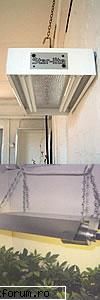
Types of Artificial Lighting There are really only two choices of lamp types for indoor growers, high intensity discharge lamps (HID lamps) and florescent lamps. Other lamps such as standard household bulbs or halogen spotlights are just not up to the job of growing cannabis. They convert most of the power they consume into heat not light or produce a light spectrum that won`t support good plant growth.
Lumens and Watts Lumens are a measure of light intensity. The more lumens per watt the more light a lamp produces.
Lamp Lumens per Watt (approx.) High Pressure Sodium (HPS) 130 Metal Halide (MH) 100 Fluorescent (Standard) 83 Mercury-vapor 50 Quartz-halogen 21 Incandescent (Regular Bulb) 15
HID Lamps There are two basic types used for growing, both available in various wattage's. High pressure sodium (HPS) and Metal Halide (MH). HPS lamps are strong in the red spectrum of light and are good for flowering. MH are strong in the blue spectrum of light and are good for growth. Although they favour different growth stages you can use either sort for growing or flowering cannabis and still get good results. If you only want one lamp however choose a HPS, they give more light per watt at a wave length more usable by light hungry flowering plants. Growers using more lights for flowering often use 2 HPS to 1 MH to provide a better balanced spectrum of light, many others just use HPS and are more than happy with the results.
Fluorescent Lamps Fluorescent lamps are fine for growing, seedlings or cuttings but flowering plants really need more intense HID light. If fluorescents are your only choice for flowering choose alternate rows of "Cool White" (blue) and "Warm White" (red) bulbs placing them as close together as possible. As fluorescent light is weak aim to keep plants short and check them daily to make sure the lights are only a few cm`s away from the tops. You should get reasonable results but don`t expect monster buds.
Distance from Plants to Lamps Unlike florescent lamps placing HID lamps too near to plants can cause burning of the tops and even running or stretching of the buds. However, the closer the lamp to the plants the more intense the light they receive. (Light intensity from lamps drops by 1/4 every foot it travels). In general keep 400 watt lamps 20 - 45 cm above plants and 1000 watt lamps 35 - 75 cm above plants. As a rough guide put the back of your hand under the lamps at the same height as the plant tops. If you can hold it there comfortably for 30 seconds they should be OK. Light Distance Calculator
How Much Light When using HID or fluorescent lamps indoors plan on giving 30 to 60 watts of light for each square foot of growing space. At a minimum outdoor or window grown plants will require at least 4 hours of direct midday sun to grow well. More is of course better. Window or greenhouse growers can always supplement poor light conditions with lamps if practical. The lamps don`t have to be on all day and as they only supplement the light they can be more thinly spread. Light Area Calculator
Lamp Reflectors (Shades) High intensity lights also come with different reflectors. All combinations work OK but a well designed reflector can increase available light by up to 30%. Basic principles are horizontal reflectors will direct more of a bulbs light at the plants than a standard vertical fitting, and a hammered, matt or dull finish will reflect light more evenly than a mirrored or gloss finish.
Light Movers and Balancers These motorised movers draw very little power (5-15 watts) yet increase a lamps coverage buy about 1/3. They benefit overall growth by lighting the plants from all sides equally, also because the lamps are moving they can be placed nearer to plants without fear of burning them.
Darkness Means Darkness When flowering cannabis the dark periods for your plants must be total and undisturbed. Even short flashes of light will stress them and slow or stop their flowering response. Remember it`s the length and quality of the darkness makes your plants flower. Make sure your grow space is light tight by getting in it and turning off the lights, wait for a few minutes for your eyes to adjust and then check for light leaks. Don`t be tempted to peak at your plants when they should be left in the dark. In an emergency one disturbance won`t do that much but continued breaks in the dark cycle will.
Timers and Contactors A timer switch for lamps is needed to ensure regular light cycles. However due to their high start up charge HID lamps will often burn out standard timers. Contactors or relay switches are used to counter this. These are really just high powered switches that lamps are plugged into. Timers are still used but now they turn on the current carrying contactor not the lamp.
Bulbs Bulbs need to be handled carefully, dirt or greasy finger marks on a bulb will damage it when it heats up. Use a bulbs packing sleeve to hold it or screw it into its fitting to keep it clean. Light output from a bulb drops as soon as its switched on. If you don`t have a light meter change your flowering bulbs every crop or two to be sure they are producing enough light.
Flowering and Strains As a rule of thumb stick to 12 hours light, 12 hours dark when flowering but remember that sometimes this can be adjusted a little. Mainly indica varieties may flower happily getting only 10 or 11 hours darkness each day. Mainly sativa varieties on the other hand may sometimes require up to 13 or 14 hour darkness each day to flower satisfactorily.
Cost of Running Lights It costs surprisingly little to power even a 400 watt HID lamp and it`s easy to work out the cost. Light Cost Calculator
Altering Light Cycle Times When flowering the most important thing is the 12 hours of darkness that the plants are receiving every day. If you need to alter the on/off times of your grow room lights just add the extra hours to the end of a dark period and turn on at the new time instead.
cu si despre weeeeeeeeeeeeeeeeeeeeeeddddddddd – poza de sizzla, in Strictly Hip-Hop&Raggae · 7.7KB